A park planted like a romantic poem
Springs and fountains under centuries-old canopy, exotics gathered in the romantic age, and a lake the water lilies have almost claimed for themselves. The garden was laid out to be wandered, not walked.
The Fern Cork Oak
Quercus suber
A centuries-old giant whose trunk and branches wear a coat of ferns. Poet Robert Southey thought a painter should cross the Channel just to see it; Queen Amélia prized it above Cascais and Estoril together.
The Water-Lily Lake
Nymphaea
The romantic lake, its surface nearly hidden beneath enormous water lilies, mirrors the palace’s crenellated silhouette.
Camellias & Magnolias
Camellia japonica · Magnolia
Planted by the first owners, the camellia walks bloom through the Sintra winter in reds and whites against dark magnolia foliage.
Tree Ferns & Araucárias
Dicksonia antarctica · Araucaria
Exotics gathered in the romantic age, giving the understorey the feel of a lost, greener world.
Springs & Fountains
Fontes e repuxos
Several springs feed fountains and rills across the park — running water heard somewhere close, long before it is seen.
View of the Moors’ Castle
Castelo dos Mouros
From the upper walks, the battlements of the 8th-century castle ride the ridge above the garden canopy.
“A painter should come from England just to see it.”
Two generations later Queen Amélia stood under the same tree and declared it worth more than Cascais and Estoril combined — “Vale mais a sobreira dos fetos do que Cascais e Estoril, tudo junto.”
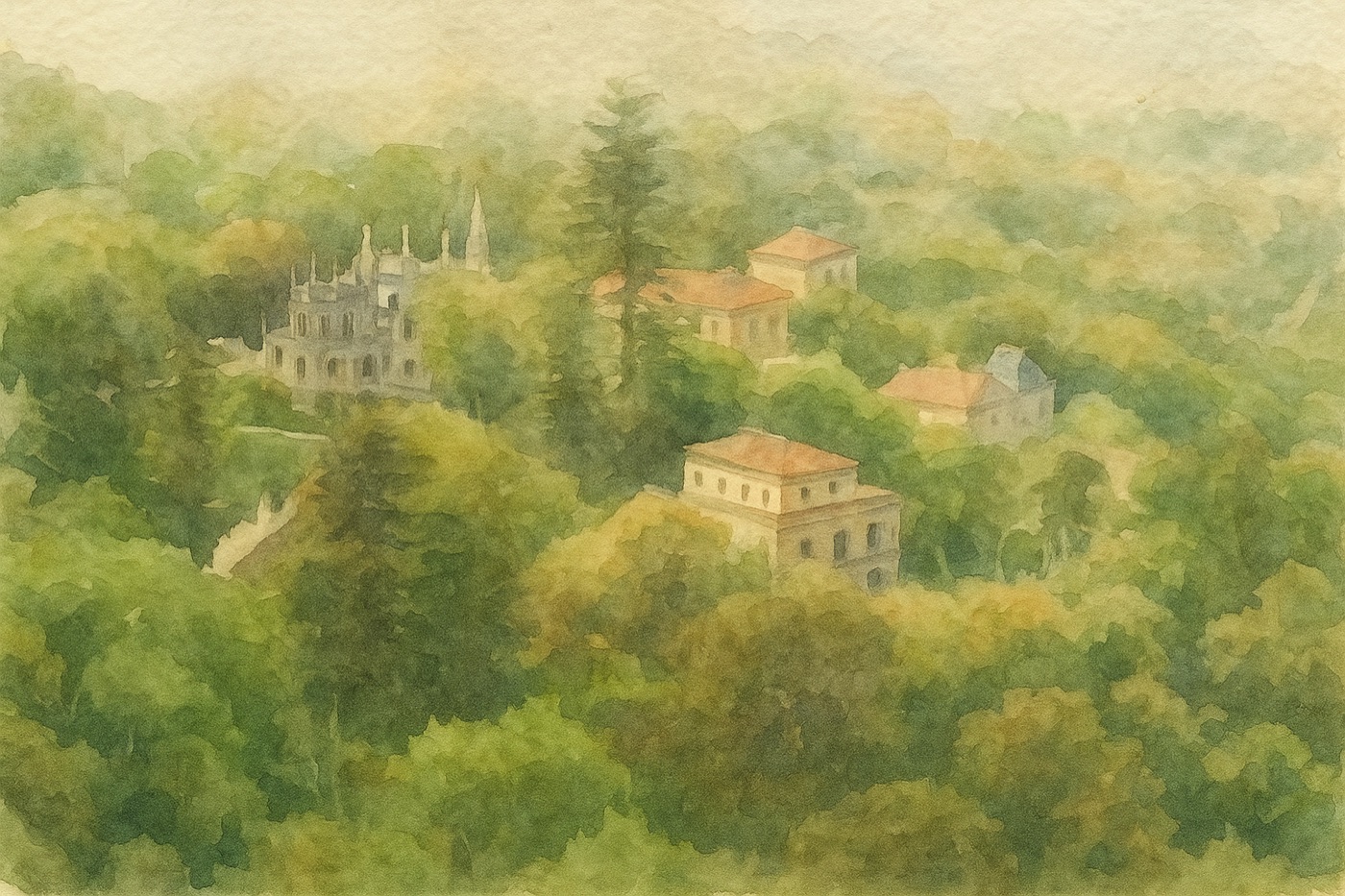
The Castle of the Moors rides the ridge
Climb to the garden's upper paths and the 8th-century battlements of the Castelo dos Mouros appear above the canopy — a reminder that Sintra's Moorish past was here long before the revival, and that the palace below is a love letter written to that skyline.