Quinta do Relógio
The garden where a queen prized a single cork oak above the whole coastline — right across the lane from Quinta da Regaleira.
- Moorish Revival palace
- c. 1860
- of romantic park
- 22,144 m²
- horseshoe-arch windows
- 7
- a royal honeymoon
- 1886
A palace out of a Moorish dream
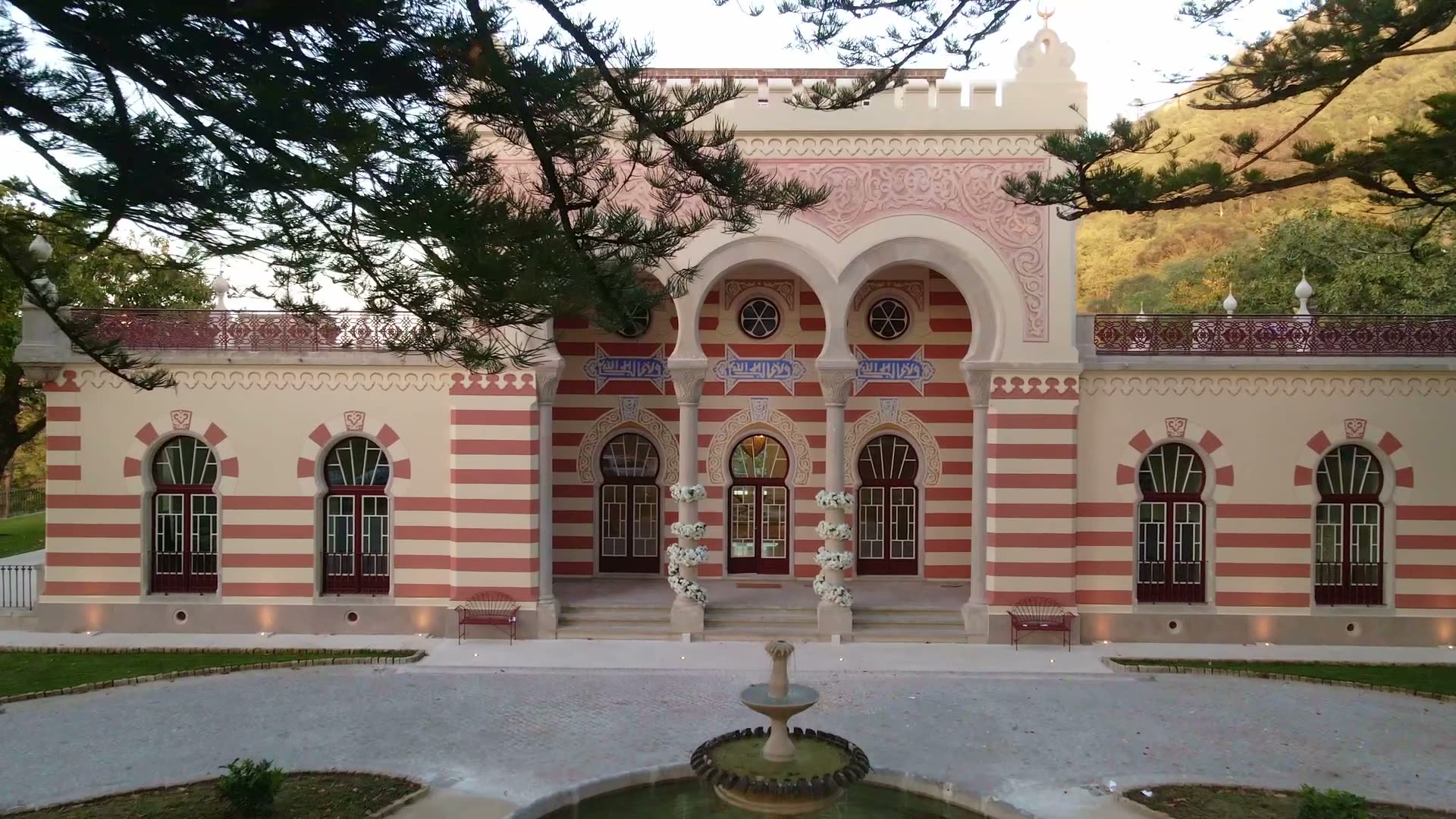
In the 1850s, a returned emigrant raised here one of Portugal's most important monuments of the Moorish Revival: a crenellated pavilion banded in brick-red and ochre, its doors inscribed "There is no victor but God."
The Islamic memory is not decoration alone — Sintra itself once belonged to Gharb al-Andalus, and the palace reads like a romantic letter sent back across six centuries.
- Architect
- António Tomás da Fonseca (1822–1894), painter and architect, fresh from studies in Germany.
- Style
- Portuguese Moorish Revival at its most romantic: horseshoe arches, crescent finials and crenellated rooflines recalling the centuries when Sintra belonged to Al-Andalus.
- Façade
- Horizontal bands of brick-red and light ochre — a striped fashion the architect borrowed from the villas of Stuttgart.
- Motto
- The motto of Granada’s last Moorish kings — “There is no victor but God” — painted white on blue above the loggia doors.

Three ways to lose an afternoon
The garden is yours; the palace, for now, is the restorers'. Its rooms are closed, which leaves you the best of it — banded facade, crescent finials, arches against the green.
The Gardens
A romantic park of camellia walks, tree ferns and a lake nearly hidden beneath giant water lilies — all of it open with a garden ticket.
The Palace, from the Paths
The banded façade, the triple-arched loggia and the blue motto plaques — admired from the garden while restoration continues inside.
The Cork Oak
A centuries-old cork oak wearing a coat of ferns. The poet Southey thought it worth crossing a sea for; Queen Amélia prized it above Cascais and Estoril together.
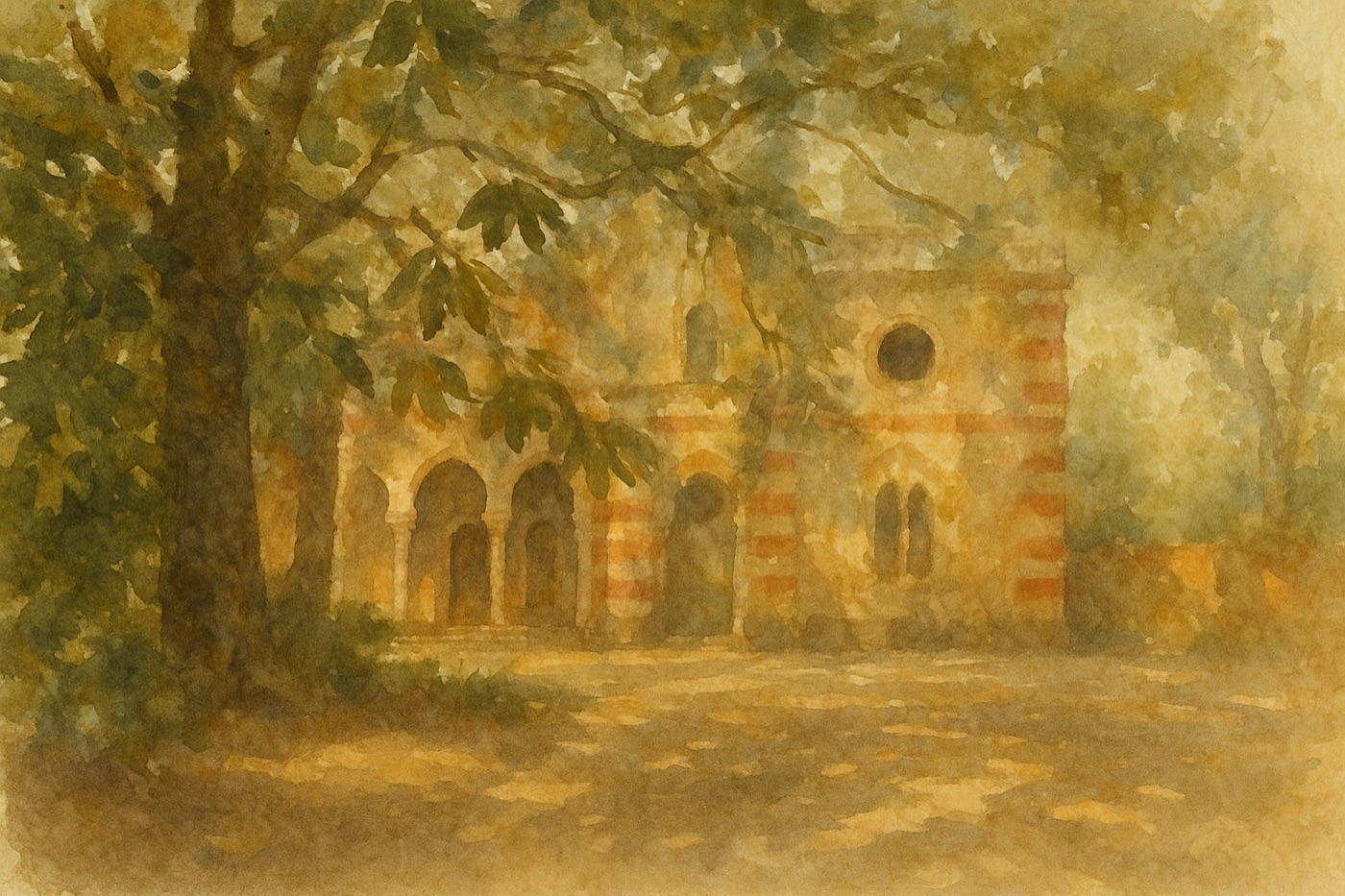
Three centuries on the same hillside
A priest's bequest, a millionaire's musical tower, a fortune with a shadow over it and a honeymoon beneath the ferns.
Read the full history- c. 1750
A priest’s bequest
Before the arches, a bequest: a priest of the Hieronymite order wills his quinta on the Sintra hillside to the Count of Redondo, and the estate’s recorded story begins.
- c. 1830
The clock tower
The millionaire B. H. Metznar builds the first house and a tower whose bells chimed the hours to the sound of minuets. The tower is gone; the name remained.
- 1850s
The “Count of Monte Cristo”
Manuel Pinto da Fonseca, returned from Brazil with a fortune built on the slave trade, buys the estate and commissions a palace to rival Pena and Monserrate.
- c. 1860
A Moorish dream rises
Architect António Tomás da Fonseca raises the palace: horseshoe arches, striped brick-red and ochre walls, and the motto of Granada on blue plaques above the doors.
The gates open at 09:30
Weekends in Sintra sell out. Reserve your entry window and walk straight through to the lake.
Book tickets